


Pistachio Vitamins are considered beneficial for one’s health due to their protein, antioxidants, and fibre content. Potential advantages include improving heart health, regulating blood sugar levels, and lowering the risk of colon cancer. According to a 2020 study, individuals with overweight or obesity who incorporated a daily serving of pistachios into their diet had a reduced body mass index and waist circumference compared to those who did not consume pistachios. The study also observed that the pistachio-eating group made healthier food choices, increasing their overall dietary fibre intake while decreasing their high-sugar and high-fat foods. It is worth noting that researchers attribute these outcomes to the increased dietary fibre intake and reduced intake of sugary treats associated with pistachio consumption.
Overview of Pistachio as a nutritious snack
Pistachios come from the pistachio tree, typically appearing green with a slightly sweet flavour. Although commonly referred to as nuts, botanically, pistachios are seeds that have been a dietary staple for millennia.
The kernels vary in colour, ranging from yellow to various shades of green, and measure around an inch in length and half an inch in diameter. To enjoy the taste, cracking open the hard shell is necessary.
Commercial pistachio production in the United States is concentrated in California, Arizona, and New Mexico. Pistachios can be purchased shelled, unshelled, roasted, or salted directly from growers in most grocery stores or in bulk.
Pistachios can be a valuable addition to your diet due to their nutritional content. These nuts consist of 20% protein, offering a higher calorie-to-protein ratio than most other nuts. This protein content may contribute to prolonged satiety and assist in weight management.
Additionally, pistachios are rich in antioxidants, ranking second only to walnuts and pecans in antioxidant levels. Antioxidants play a crucial role in combating free radicals in the body, which can damage cells, proteins, and DNA, leading to premature ageing and various illnesses such as heart conditions, diabetes, and cancer.
Moreover, pistachios are a noteworthy source of unsaturated fatty acids and potassium, both of which are known for their antioxidant and anti-inflammatory properties.
Like other types of nuts, the health benefits of pistachios are commonly featured in the Mediterranean diet, a dietary pattern associated with long-term health benefits.
Key vitamins and minerals found in pistachio
Pistachios, known for their bright green colour and unique flavour, are not just delicious snacks but also a valuable source of necessary vitamins and minerals. Explore the realm of pistachios beyond mere enjoyment to discover the pistachio health benefits.
Pistachio vitamins provide an array of vitamins that are essential for overall health and wellness.
Vitamin Bounty
- Vitamin B6: Found abundantly in pistachios, vitamin B6 plays a crucial role in supporting a healthy immune system, aiding brain development, and assisting in protein metabolism.
- Vitamin K: Pistachios are a valuable source of vitamin K, which is necessary for blood clotting and maintaining bone health. Sufficient vitamin K intake is linked to enhanced bone density and a reduced risk of fractures.
- Thiamine (Vitamin B1): Pistachios include thiamine, a vital B vitamin that contributes to energy metabolism, nerve function, and DNA synthesis.
:max_bytes(150000):strip_icc()/pistachios_annotated2-314d5da7c415419ba2d43d5c97684756.jpg)
Plant-Based Protein Powder
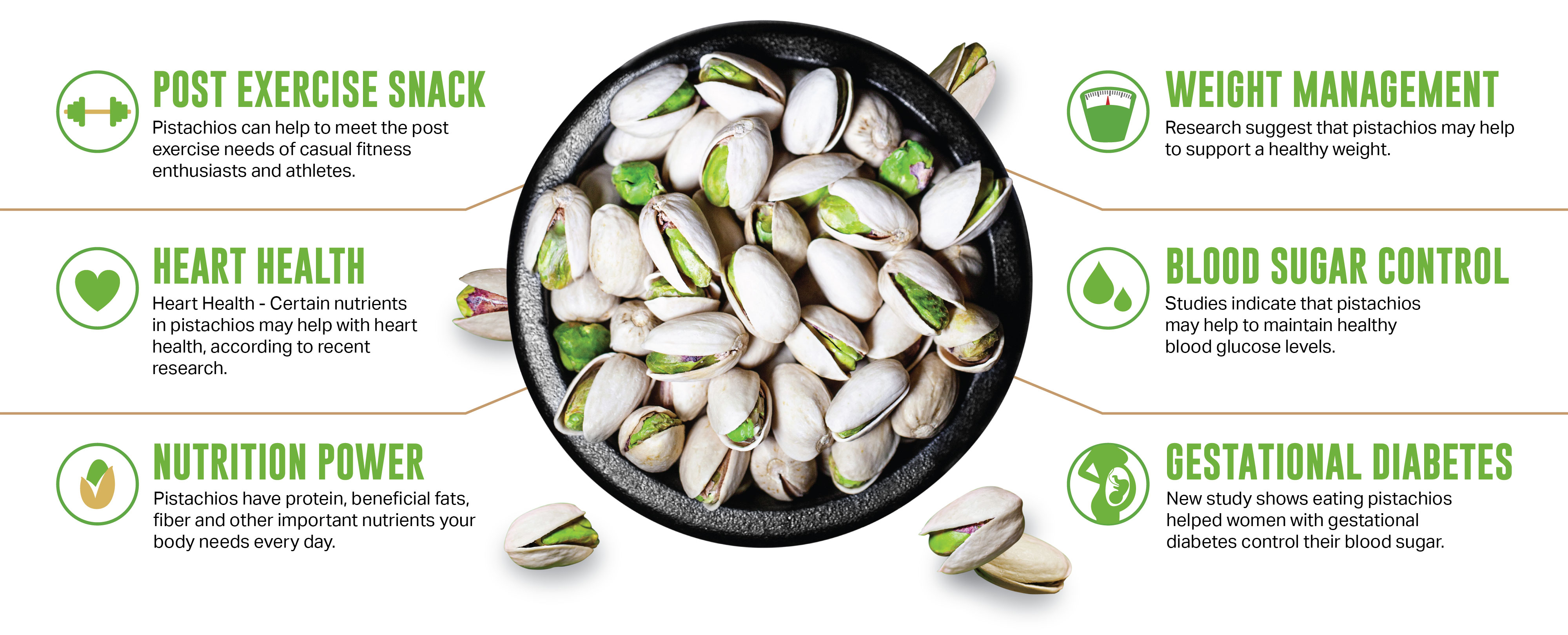
Pistachios are a rich plant-based protein source that can benefit different dietary preferences. They offer a complete protein profile by containing all necessary amino acids, serving as a convenient snack option for individuals looking to vary their protein intake, such as vegetarians and vegans. The presence of protein, beneficial fats, and fibre in pistachios promotes satiety, thus supporting weight control and appetite management.
Antioxidant-Rich Goodness
Pistachios contain various antioxidants that help fight oxidative stress and inflammation in the body. These antioxidants, like Lutein and Zeaxanthin, are vital in maintaining eye health by safeguarding against age-related macular degeneration and preserving overall vision. Additionally, pistachios provide a significant amount of vitamin E, an important antioxidant essential for shielding cells from free radical-induced damage.
Heart-Healthy Fats
Pistachios are well-known for their heart-healthy fat content, mainly monounsaturated and polyunsaturated fats.
- Monounsaturated Fatty Acids: Linked to cardiovascular health, these fats play a role in decreasing unhealthy cholesterol levels and lowering the chances of heart diseases.
- Polyunsaturated Fatty Acids: Abundant in omega-3 and omega-6 fatty acids, pistachios promote general heart well-being by assisting in maintaining a healthy cholesterol level and diminishing inflammation.
Mineral Marvels: Nutritional Value of Pistachios
Pistachios contain important minerals that support various bodily functions.
Pistachios contain phosphorus, which is vital for bone health. Phosphorus plays a key role in energy metabolism and cellular function.
Pistachios provide magnesium, which is essential for muscle function, nerve transmission, and energy production. Sufficient magnesium intake is associated with enhanced cardiovascular health.
Pistachios provide a notable amount of copper, a trace mineral essential for connective tissue formation, energy production, and antioxidant defence, in a small serving.

Nutritional Value of Pistachio
Compared to other nuts, dry roasted pistachios have a lower fat content at 43.4 g/100 g, primarily made up of saturated fatty acid (5.6 g), polyunsaturated fatty acid, and monounsaturated fatty acid. The majority of the fat content in pistachios comes from oleic and linoleic acids, accounting for over half. Additionally, pistachios offer a good amount of vegetable protein (approximately 21% of total weight), featuring a higher essential amino acid ratio compared to commonly consumed nuts like almonds, walnuts, pecans, and hazelnuts, along with a notable presence of branched-chain amino acids.
The overall carbohydrate content is relatively low to moderate (around 29% by weight), yet they are notably rich in fibre, comprising 10% insoluble and 0.3% soluble forms by weight. Pistachios also provide significant mineral content such as potassium, phosphorus, magnesium, and calcium, along with vitamins like A, E (especially γ-tocopherol), C, B (excluding B12), K, and folate, with comparatively higher levels of these nutrients when compared to other nuts. Moreover, pistachios boast a rich reservoir of lutein, zeaxanthin, and various phenolic compounds like anthocyanins, flavonoids, and proanthocyanidins, contributing to their considerable antioxidant capacity. They are notably abundant in phytosterols, including stigmasterol, campesterol, and β-sitosterol, making them a comprehensive and nutritionally diverse option among nuts that potentially promote health.
Comparison pistachio with others Nuts
Pistachios are part of the Anacardiaceae family, originating presumably from Central Asia as the edible seeds of a small, long-lived tree. The primary types of pistachios include the Noble pistachio, green almond, and Levante, which feature a yellow edible portion.
Walnuts refer to the nuts of any Juglans genus tree and are not true botanical nuts but edible seeds of a drupe. The two most prevalent walnut variations are the Persian and black walnut.
In terms of nutrient content, pistachios contain higher levels of iron, potassium, and phosphorus and lower sodium than walnuts. Conversely, walnuts are richer in magnesium, copper, and zinc than pistachios, while both nuts provide equivalent amounts of calcium. It’s important to note that both nuts serve as valuable mineral sources essential for daily dietary intake.
Nuts, with their unsaturated fats and fibre content, offer beneficial effects for individuals with type 2 diabetes, according to various studies. For instance, one study indicated that consuming one tablespoon of walnut oil daily for three months led to an 8% decrease in fasting blood sugar among 100 participants with type 2 diabetes.
Similarly, another study revealed that consuming 25 grams of pistachios twice daily reduced fasting blood sugar levels by 9% in individuals with type 2 diabetes.
How Pistachio Vitamins Support Overall Health?
Previous research indicates that pistachio vitamins, due to their unique attributes and components such as polyunsaturated fatty acids, fiber, protein, minerals, and antioxidants, have the potential to enhance health. The significance of health in preventing diseases was first recognized in the early 1950s through the Seven Countries Study. This study revealed a correlation between lower mortality rates and a higher diet ratio of unsaturated to saturated fatty acids. Sivori and colleagues highlighted the beneficial impact of essential nutrients like minerals, vitamins, unsaturated fats, and proteins found in seeds like pistachios, which are cholesterol-free, on heart health. By positively influencing factors like fat levels (LDL, HDL), triglycerides, blood glucose, arterial health, endothelial function, and blood pressure, pistachios contribute to overall well-being. Atherosclerosis, characterized by artery hardening and narrowing, is linked to reduced vessel flexibility and elasticity caused by fat and cholesterol buildup in artery walls. Studies suggest that pistachios can combat atherosclerosis by improving fat and cholesterol levels and promoting endothelial recovery through nutrients like l-arginine, vitamins, and fibre present in pistachios. Including essential fatty acids, vitamins, minerals, unsaturated fats, fibre, and antioxidants in pistachios is crucial for cardiovascular health and managing blood pressure, blood sugar, and lipid levels. Research shows that pistachio consumption benefits individuals with pre-diabetes, enhancing lipoprotein subclasses, reducing postprandial glucose and insulin levels, and supporting a healthier metabolism. Alanzu et al. emphasized the advantages of incorporating pistachios into dietary plans as a preventive measure for pre-diabetes, highlighting their ability to lower blood sugar and insulin levels and counteract the adverse effects of pre-diabetic conditions. Studies have indicated that individuals with pre-diabetes face a significantly higher risk of developing diabetes compared to those with no pre-existing conditions.
Farming and Harvesting Pistachio in Mani Renjal Company
Mani Ranjal Company is one of the organic and high-quality Iranian pistachio production companies that was established by Mr. Mousavi in 2003, four years later, Mr. Asadi’s father built a huge office for the Generation of pistachios, sending out, and preparing administrations (peeling, drying, etc.). To guarantee the most elevated quality and client fulfilment, Asadi opened a bundling company for interior pistachio plantations. They offer roasted and unroasted pistachios in various sizes, prioritizing the well-being of the item by keeping up research facilities for worldwide standard testing.
Focusing on quality, reasonable price, and customer service, Mani Ranjal seeks to satisfy customers and increase marketing and is always trying to prevent pistachios from being contaminated with Aspergillus fungus and aflatoxin poison with sufficient research in modern science.
Mani Renjal Company aims for sustainable development and increased presence in global markets. We aim to enhance product quality and export to at least 50 countries worldwide.
Conclusion
Pistachios, rich in proteins, minerals (e.g., potassium, calcium, magnesium, manganese, and more), vitamins, and antioxidants, are beneficial in promoting human health, particularly in the cardiovascular system, blood lipids, and blood pressure. Moreover, unsaturated fats, by influencing blood lipoproteins, help decrease the risk of cardiovascular disease and diabetes, as well as manage weight and metabolic syndrome. These nuts can also support individuals with prediabetes by altering their unfavourable metabolic processes.
Due to their hard shells, consuming pistachios may pose a challenge. If a pistachio has a crack, you can utilize another shell to assist in opening it. In cases with no visible cracks, gently placing the nuts on a cutting board, covering them with a towel, and carefully tapping them should suffice to crack open the shells.
Whether shelled or unshelled, pistachios can remain fresh for approximately one year in a refrigerator or up to three years in the freezer.
FAQ:
- What key nutrients do pistachios have?
Pistachios provide a substantial amount of protein, fibre, copper, manganese, vitamin B6, thiamin, potassium, phosphorus, chromium, vitamins E and K (phylloquinone), riboflavin, folate, magnesium, iron, zinc, and selenium, along with lesser amounts of various other micronutrients.
- Is pistachio good for the skin?
The Vitamins in Pistachio hydrate and enrich the skin while boosting its flexibility. The high levels of fatty acids play a key role in this process. Moreover, their vitamin E content effectively combats dryness, serving as an anti-ageing solution that promotes a revitalized, youthful complexion.
References
https://www.health.com/pistachios-8423108
https://www.webmd.com/food-recipes/benefits-pistachios
https://foodstruct.com/compare/nuts-pistachionuts-raw-vs-walnut
https://www.webmd.com/food-recipes/benefits-pistachios
https://www.medicalnewstoday.com/articles/322899#weight-loss