


Over the past ten years, the pistachio sector has become one of the most fiercely competitive industries, generating significant profits for leading pistachio-producing nations. Furthermore, amidst the COVID-19 pandemic, there has been a rise in the consumption of pistachios, leading to heightened global interest from farmers and exporters in this thriving industry.
The Eurostat report shows a 17% decrease in Iran’s pistachio exports to the European Union in comparison to the 2022 export levels. Last year, Iran exported more than €111 million of pistachios to Europe.
In 2023, most of Iran’s pistachio exports to Europe included natural pistachio kernels, totaling €65 million, and pistachios with shells, coming to €27 million. These numbers show a 4% drop in pistachio kernel exports and a 37% decline in pistachio exports with shells from the previous year.
Germany stood out as the leading buyer of Iranian pistachios in 2023 among European nations, with Iran selling pistachios worth €49 million to the country. Italy came next with a total of €7 million, while Spain purchased €5 million in value for the same product.
Iran pistachio export
Examining the past of numerous advanced nations reveals that the agricultural sector is a key foundation of their robust economies. Currently, meeting the nutritional demands of individuals is a significant global concern, leading to heightened competition in the export of agricultural and livestock products. Pistachio is a crucial export product for Iran, contributing significantly to the country’s foreign currency earnings. Iranian pistachios are well-liked in various countries worldwide for their appropriate size, distinct flavor, and top-notch quality, attracting exclusive clientele annually. Remain with us to discover further information on exporting pistachios and the various stages involved in this lucrative industry as discussed in the following sections.
How to export pistachios?
These are the steps:
Supply of products
Always make sure to read and gather information before taking any action. This stage is crucial in the process of exporting pistachios, as it serves as the foundation for subsequent steps. To run a thriving business, it’s essential to investigate topics like locating customers overseas, the preferred type of pistachio product, the health and food regulations they follow, and the customs requirements of the country; Some European nations enforce stringent rules on aflatoxin levels in pistachios, while others prefer processed over raw pistachios. By investing time in studying and researching, you can confidently offer your customers top-quality pistachios for sale. You have the option to purchase pistachios directly from the farmer on the Baba pistachio website.
Packaging the products
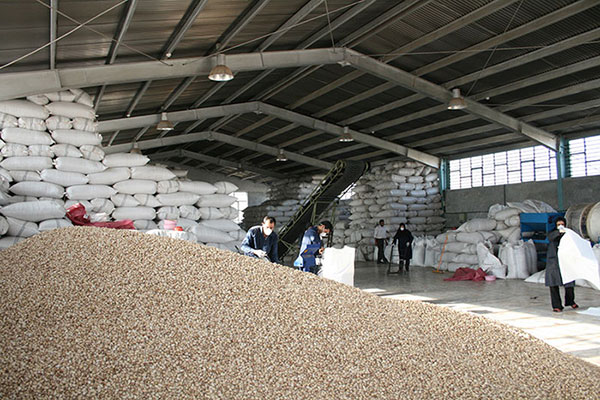
The packaging of the product is designed to attract customers and protect the product inside.
Once the optimal product has been selected for customers, the next step is to prepare it for packaging. An appealing packaging not only draws in more customers but also safeguards the product’s quality and lifespan, while also enhancing the reputation of the manufacturer and pistachio exporter. Along with focusing on the aesthetics of the packaging, it is important to include details such as the type of pistachio, its production specifics, and the producing, exporting, and importing companies.

getting reports of the Standards of sent-out pistachios
Obtaining health and hygiene certificates is a crucial and time-consuming process in the export of pistachios. To proceed, the product’s standards must be approved by the relevant department in the exporting country. Additionally, all necessary health and hygiene approvals from the destination country must be obtained. The specific certificates required may vary depending on the destination country. For instance, exporting pistachios to European countries requires conducting all tests and obtaining health and food hygiene certificates. In certain cases, the product may also need to acquire food and drug approvals for the destination country. It is important to note that this step is completed before the cargo enters customs.
Submitting pistachio items to traditions
Once all the necessary tests have been conducted and the required approvals have been obtained, the pistachio product will be submitted to customs in the respective cities where it is produced. During this crucial stage, it is essential to ensure the completion of relevant documentation, including declarations of type, specifications, weight, and the product invoice.
getting pistachio wellbeing certificate at traditions
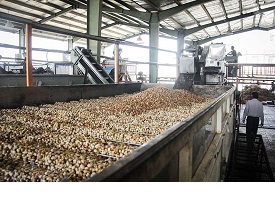
Obtaining a health certificate for pistachios at customs involves a thorough process. In the case of bulk-volume products without a registered brand or not meeting the necessary standards, samples are taken for testing. These samples undergo multiple tests to ensure compliance with health regulations. Once the required health certificates are obtained, the pistachios can then proceed to obtain the customs clearance certificate.
Exported pistachios being delivered to transport companies
After passing the traditions, a charge of filling must be arranged for trading pistachios. Luckily, the trouble of this arrangement isn’t like other stages; Since the trading companies report step by step how to trade pistachios amid the contract with the transport companies, and the transport companies moreover educate the client approximately the steps of doing the work within the same way. One of the foremost vital obligations of the transport companies in trading pistachios is to check and make beyond any doubt that the holders, wagons, trucks, etc. are clean and cleaned. Refrigerated holders are not as a rule required for trading pistachios.
Accepting the charge of filling and settling the account
When a draft bill of lading is shown with details like cargo specifications, sender’s country, and receiver’s country, the sender’s country gets a portion of the transaction amount. This percentage can vary depending on the economic situation of the receiving country or the agreement between the seller and the buyer. Typically, 20% of the total transaction amount is received, while the remaining 80% is paid upon presentation of the bill of lading image. Shipping companies must provide the original bill of lading and other essential documents for customs clearance to the customer.
Getting an additional certificate of the product was originally made for export
To get a certificate of origin from the Chamber of Commerce, shipping companies need to obtain additional customs paperwork and confirm the bill of lading from both the seller and customs. Once all the necessary documents are filled out, the shipment can be processed and sent to its final location.
By reading the guide on exporting pistachios clearly and helpfully, we trust that you now have a better understanding of the process and find the business more manageable than ever before.
Pistachio exporting countries
Here are the 20 countries that sold the most pistachios in 2022, no matter if they were still in their shells or not.
The United States made $1. 8 billion from selling pistachios, which is 57. 8% of all pistachio exports.
- Iran received $355. 5 million, which is 11. 5% of the total amount.
- Turkey earned $257. 9 million, which is 8. 3% of the total amount.
- Germany: 2477 million dollars, which is 8 percent.
- Belgium: $1031 million, which is 3. 3% of the total.
- Netherlands: $511 million (17%) is a small amount of money.
- Italy got $39. 5 million, which is 1. 3% of the total amount.
- Spain received $31. 6 million, which is 1% of the total amount.
- In Afghanistan, $30 million was given, which makes up 1% of the total amount.
- Syria received $28 million, which is 0. 9% of the total.
- Greece: $263 million (09%) is a small amount.
- The United Arab Emirates gave $26. 2 million, which was 0. 8% of the total amount.
- In Hong Kong, $25. 4 million, which is 0. 8% of something
- China: 217 million dollars (0. 7 percent)
- Australia received $12 million, which is 0. 4% of the total amount.
- France earned $6. 8 million, which is 0. 2% of the total.
- Vietnam received $4. 9 million, which is 0. 2% of the total amount.
- Slovakia: $48 million (02%) – The amount of money from Slovakia is $4. 8 million, which is 0. 2% of the total.
- Luxembourg: $46 million (01%) means that Luxembourg contributed $4. 6 million, which is 0. 1% of the total amount.
- Armenia earned $3. 3 million, which is 0. 1% of the total amount.
In 2022, 20 countries sent out almost all of the pistachios that were sold around the world.
Some countries that sell a lot of pistachios have been selling even more since 2021. These countries are Australia, Slovakia, Greece, and mainland China. They have all been selling more pistachios than before.
The big suppliers that sold fewer pistachios to other countries were Vietnam (down by 69. 3% from last year), Hong Kong (down by 66. 2%), United Arab Emirates (down by 64. 1%), Iran (down by 61. 1%) and Luxembourg (down by 56. 7%)
Pistachio export from Iran
The export trend in Iran has shown significant growth since the Islamic Revolution. In 1996, Iran accounted for about 66.7% of the world’s pistachio exporters. However, due to factors like freezing weather and increased competition from countries like the USA, this percentage dropped to 53.2% by 2006. The main importers of pistachios produced by Iran, are European countries, CIS countries, Japan, Latin America, and more.
Iran’s pistachios are exported through two main structures: private companies and cooperatives. The Rafsanjan Pistachio Producer Cooperative (R.P.P.C) handles 50% of the exports, while the remaining 50% is managed by private agents. The foreign exchange earnings from pistachio exports were $259.4 million in 1990, $679.9 million in 2003, and reached $1 billion in 2006. Germany has been a key importer of Iranian pistachios, serving as a distribution hub for other European countries. Other major importers in recent years include Italy, France, Belgium, England, Holland, Spain, Hungary, Canada, India, China, Syria, Mexico, Luxemburg, Russia, UAE, Australia, and Hong Kong. Germany and Japan have historically been important importers, with Hong Kong and Russia also becoming significant in more recent years.
The European market accounted for about 71% of Iran’s pistachio exports from 1994 to 2003, with Germany being a key gateway for distribution. The decrease in exports to Europe was not due to a lack of success, but rather a shift in export management strategies towards direct exports to destination countries by both cooperatives and private sectors.
also read: pistachio production
Pistachio Exports in Mani Renjal Company
Mani Ranjal Company is one of the organic and high-quality Iranian pistachio production companies that was established by Mr. Mousavi in 2003, and four years later, Mr. Asadi’s father built a large facility for Production of pistachios, export, and processing services (peeling, drying, etc.). gave. To ensure the highest quality and customer satisfaction, Esadi opened a packaging company inside pistachio orchards.
Our company, focusing on quality, competitive pricing, and customer service, aims to enhance customer satisfaction and expand market reach. Mani Renjal Company aims for sustainable development and increased presence in global markets. Our goal is to enhance product quality and export to at least 50 countries worldwide.
Conclusion
Iran, the leading exporter of pistachios in the world, holds a 53.2% share of the market, with the USA coming in second at 22%. European countries like Germany, England, and France are consistent buyers of Iran’s pistachios, while Luxemburg, Italy, and Holland prefer pistachios from the USA. Before 2000, China imported pistachios from the USA, but now they are importing from Iran. European countries have decreased their imports from Iran due to hygiene concerns, but countries like China, Hong Kong, Australia, India, Syria, and Mexico have increased their imports.
Kerman city in Iran, known for its vast pistachio orchards covering about 212 thousand hectares, is the largest pistachio exporter in the country, with a foreign exchange value exceeding 395 million dollars. The most popular export varieties from Kerman province include Akbari, Ahmad Aghaei, Fandoghi, and Kaleguchi pistachios. Neighboring countries, as well as China, Germany, Italy, and other European nations, are major buyers of Iranian pistachios.
FAQ:
- Which country exports the most pistachio?
In 2021-2022, the United States, Iran, and Turkey are the top three pistachio exporting and producing countries in the world, with the United States leading as the largest pistachio producer and exporter.
- Which country has the cheapest pistachio?
To thrive in this sector, Iranian pistachio suppliers must offer competitive prices to entice global customers and compete with the leading exporter in the world, the US.
References:
https://www.worldstopexports.com/top-pistachios-exports-imports-by-country-plus-average-prices/
https://kivaaz.com/en/pistachio-export/
https://en.otaghiranonline.ir/news/45349
https://om.ciheam.org/om/pdf/a94/00801315.pdf
https://grandornuts.com/iranian-pistachio-kernels-export/
Contact US
Email: info@manirenjal.com
Website: www.manirenjal.com
Tel: +989129567950
Instagram: @mani-renjal